What you’ll need
Tools:- Small flat head screwdriver
- Wire strippers
- Snippers
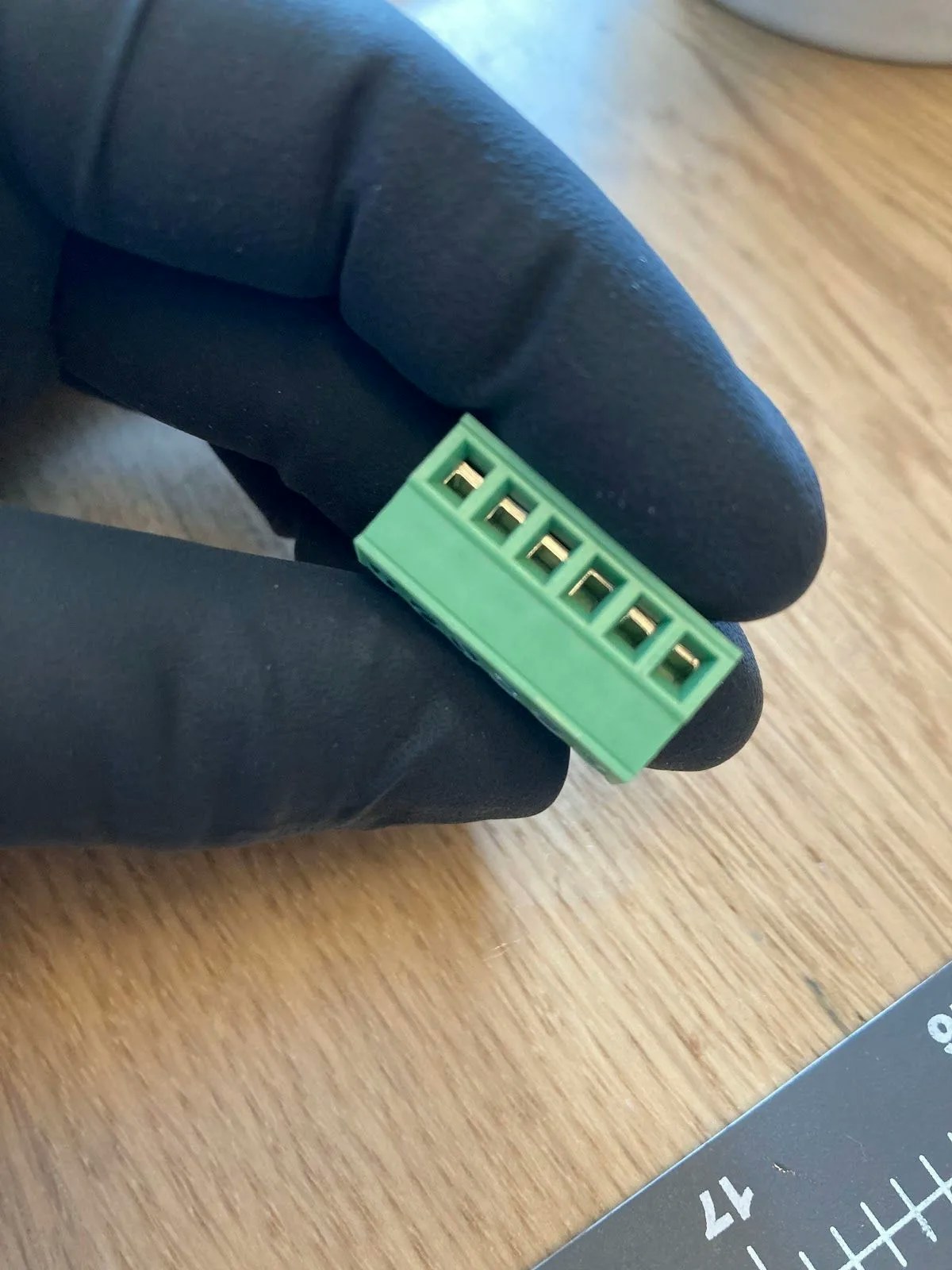
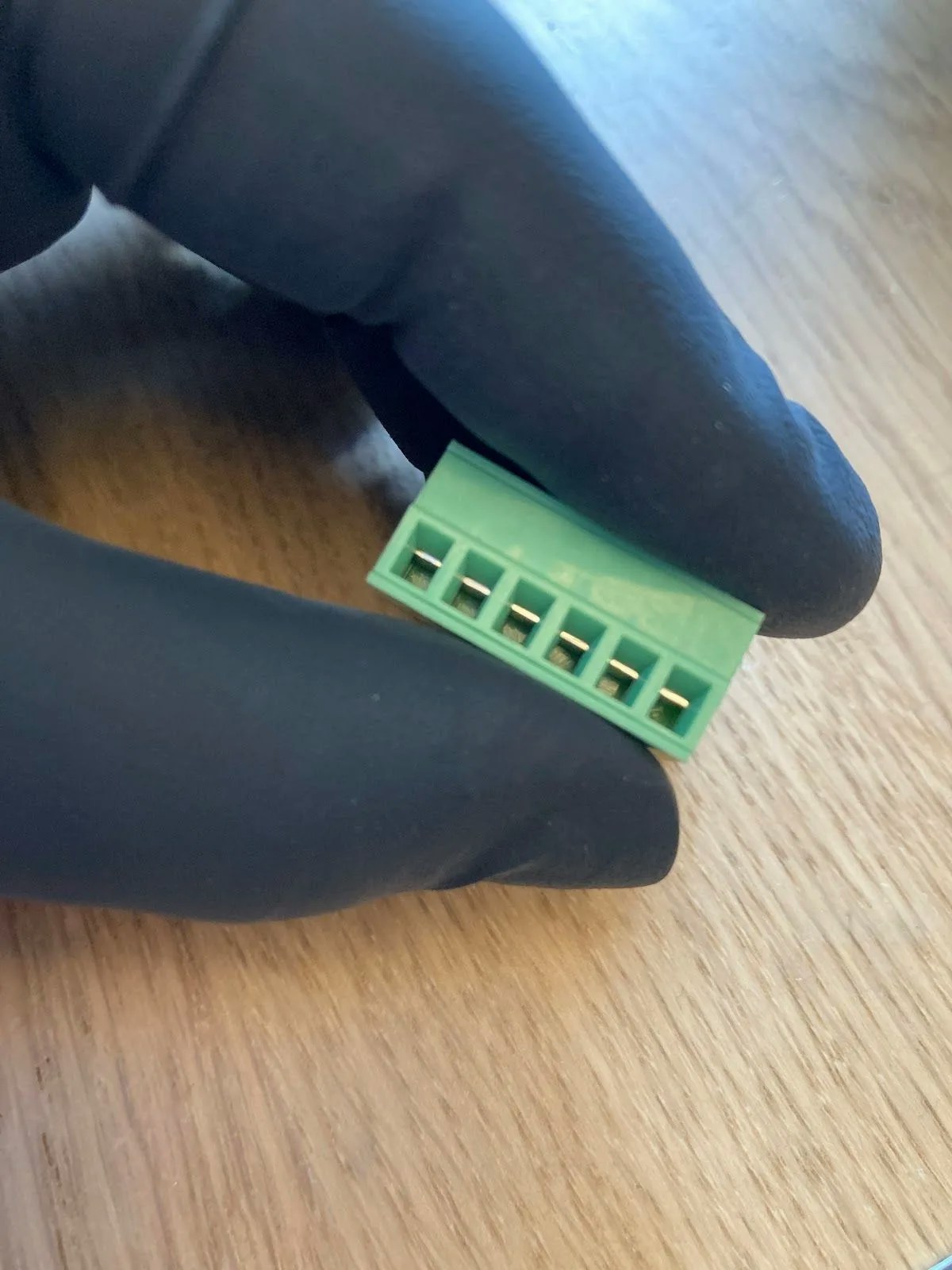
- Green connector (6-position screw terminal block)
- PH04 Cable (4-wire signal cable with white JST connector)
- 250mm 18AWG power cable (2-wire, red and black)
- Wiring sleeve (optional)
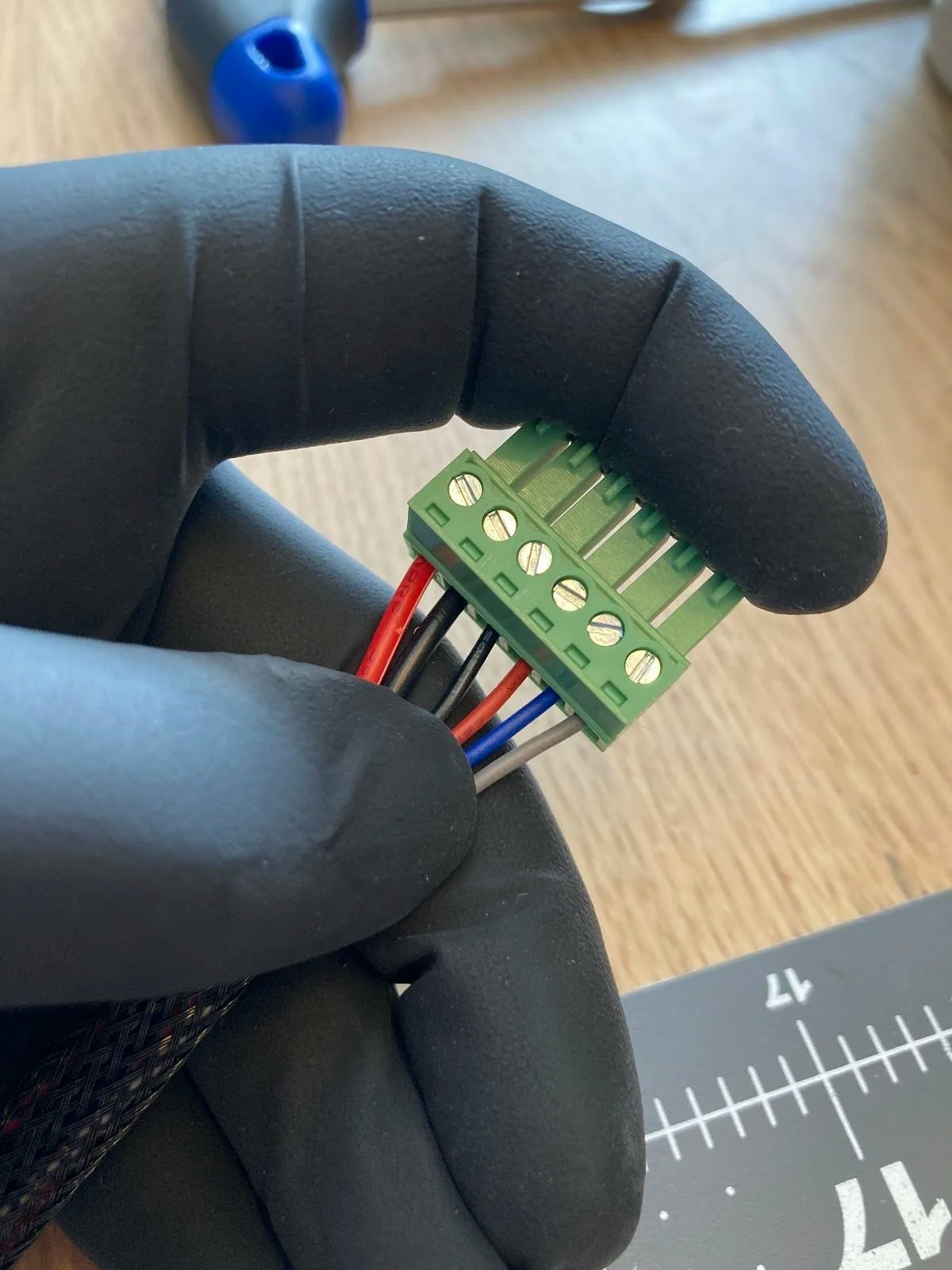
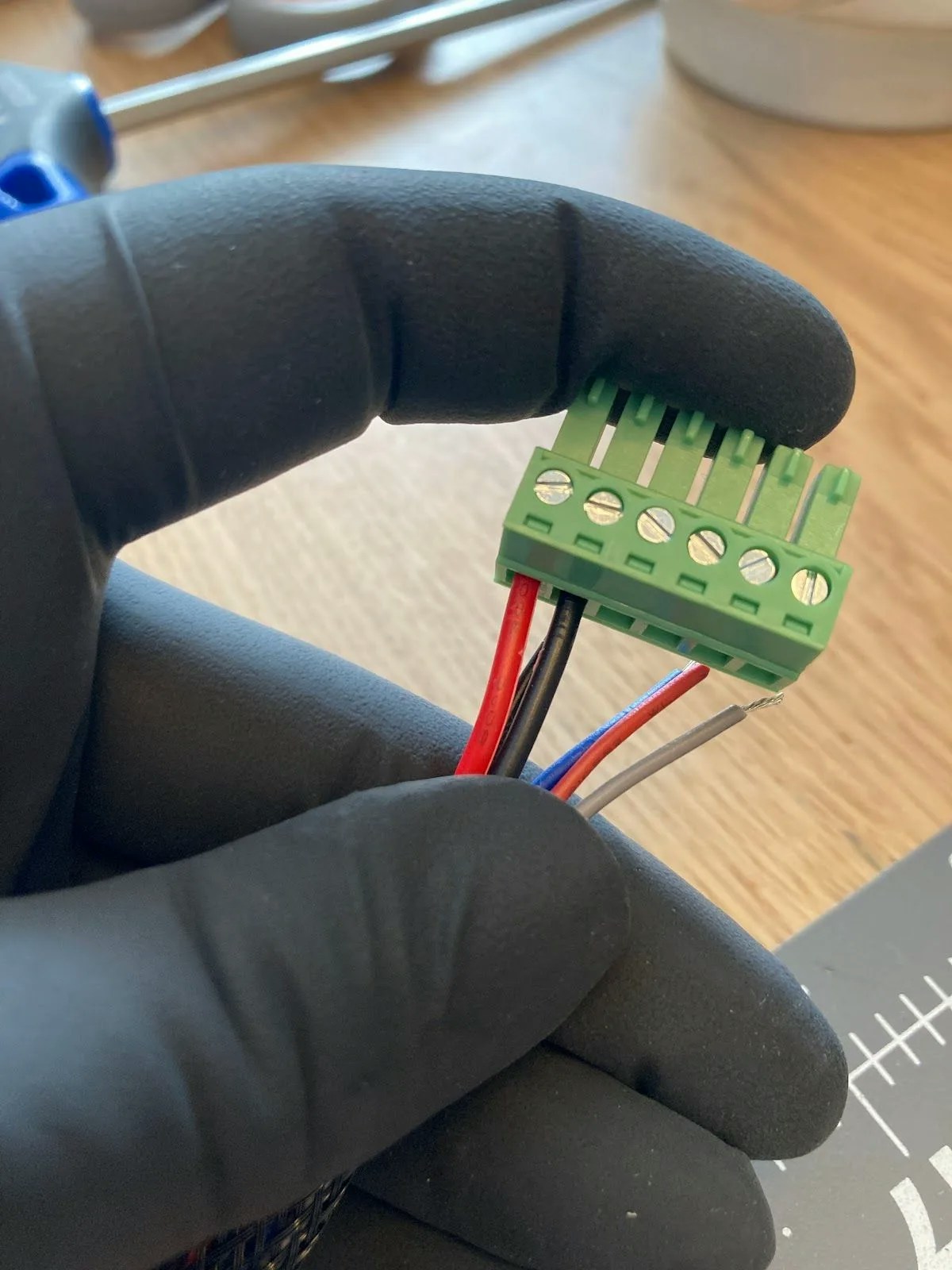
The green connector is a 6-position screw terminal block that accommodates all 6 wires: 2 from the power cable and 4 from the PH04 signal cable. No crimping required—simply insert stripped wires and tighten the screws.
Wiring the green connector
Open the connector terminals
Use your screwdriver to open all terminals on the green connector. The terminals arrive in the closed position by default.


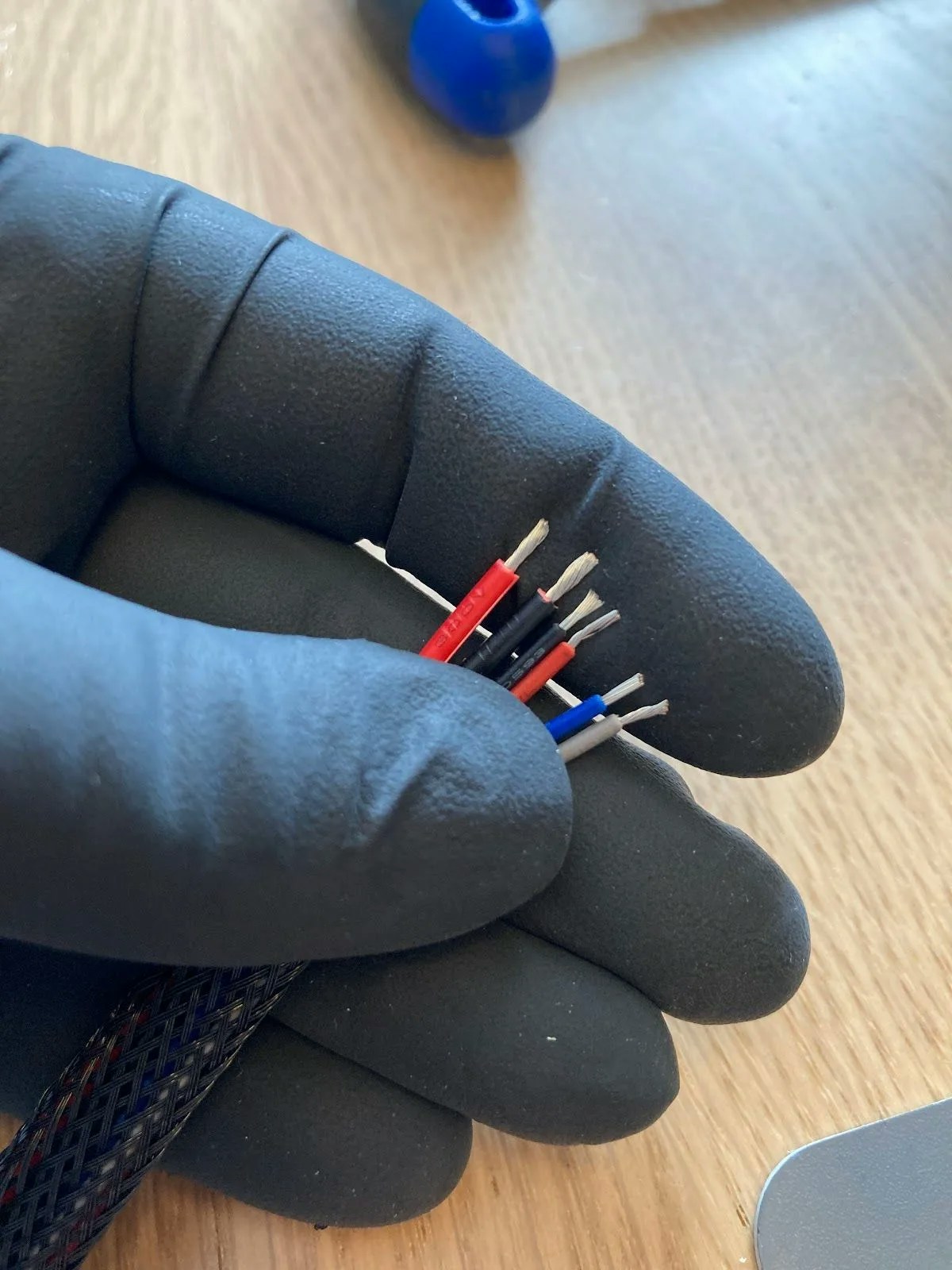
Prepare your wires
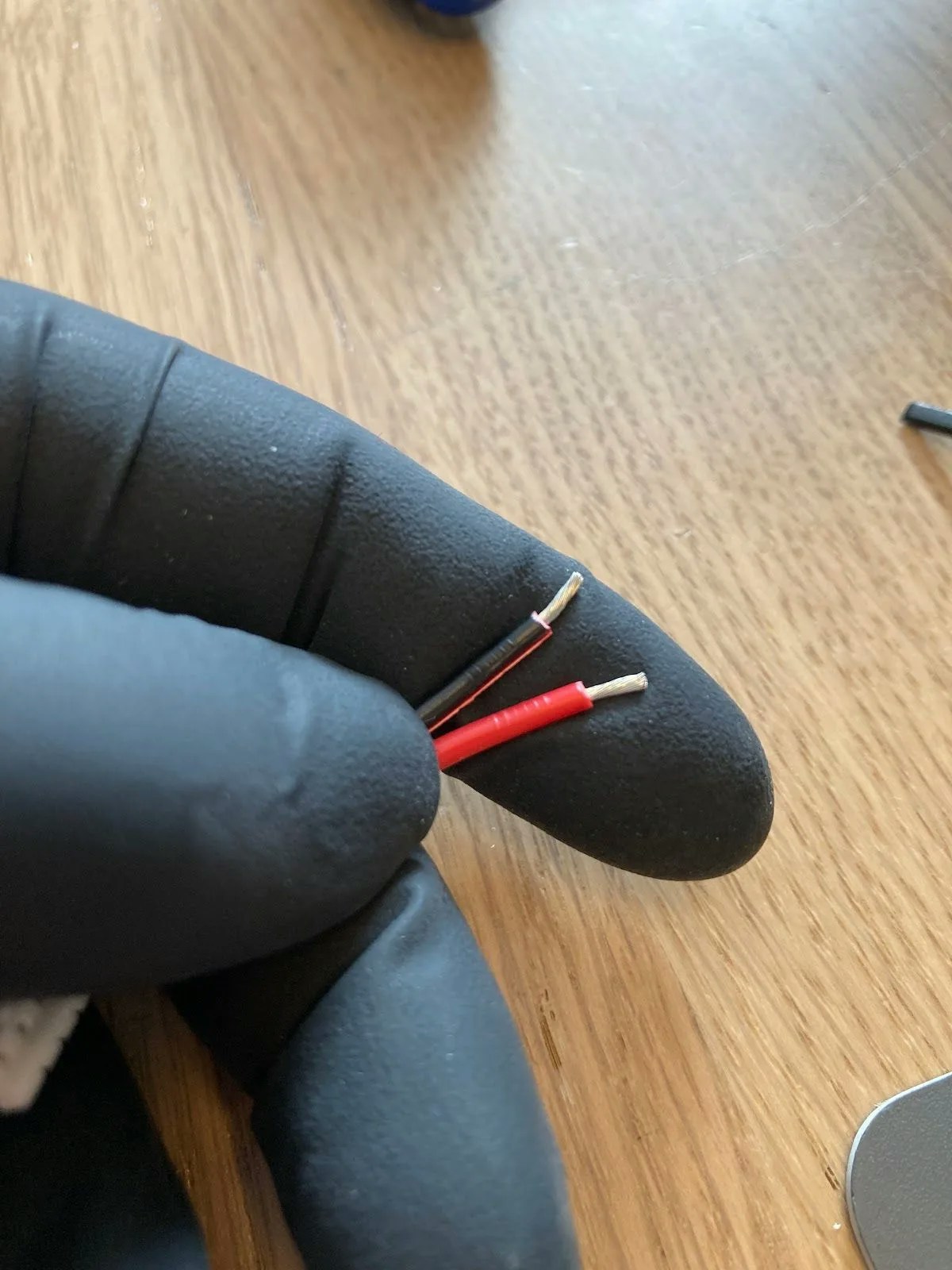
Separate the power cable wires and strip all wire ends to approximately 2-3mm (about ⅛”).Arrange your wires in this order from left to right:
- Power cable: Red, Black
- PH04 cable: Black, Red, Blue, Grey
Connect the power cables
Insert the power cables (red, then black) into the first two terminals. Ensure the screws face the top of the connector.


Wiring the OSSM PCB
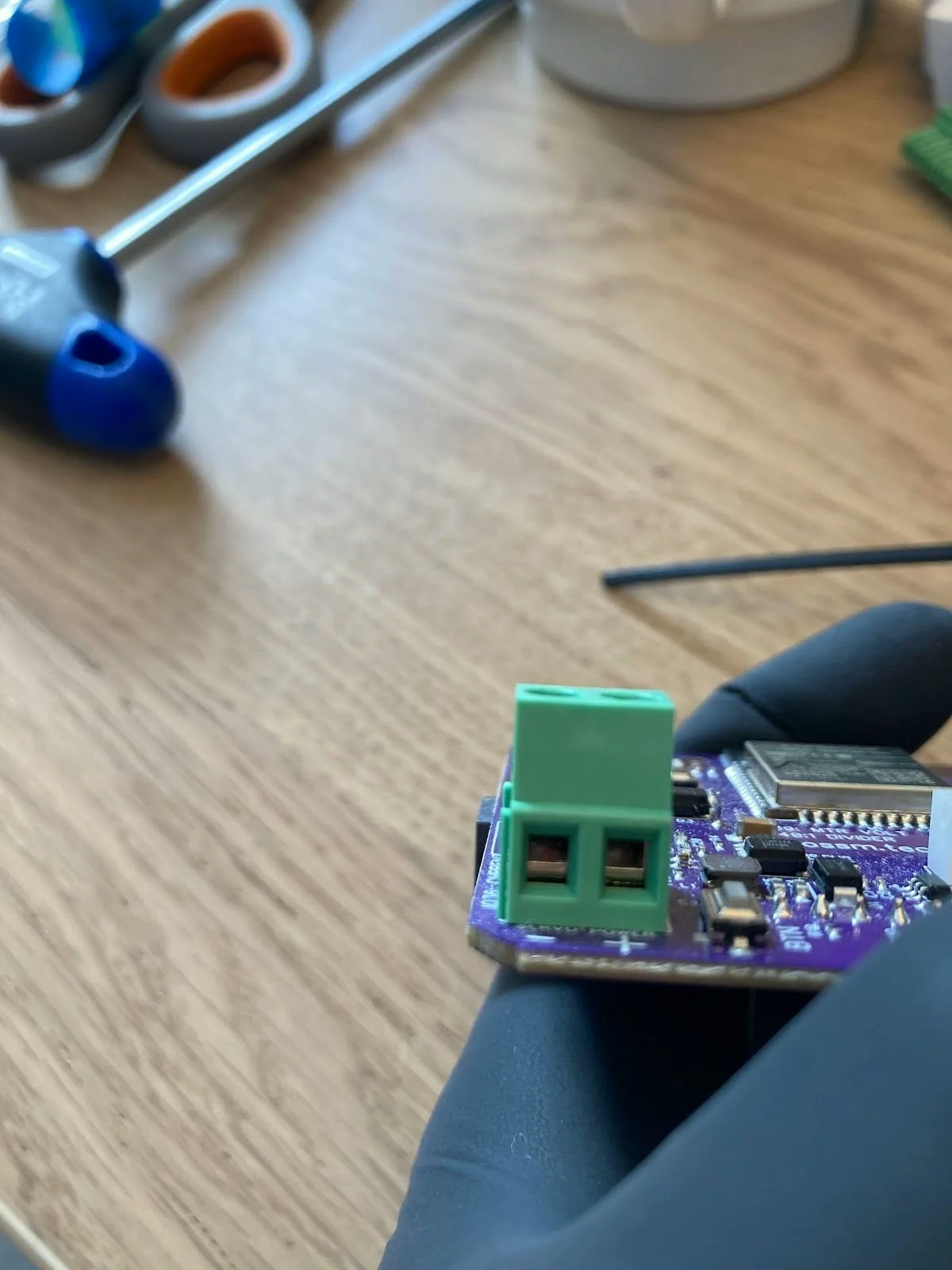
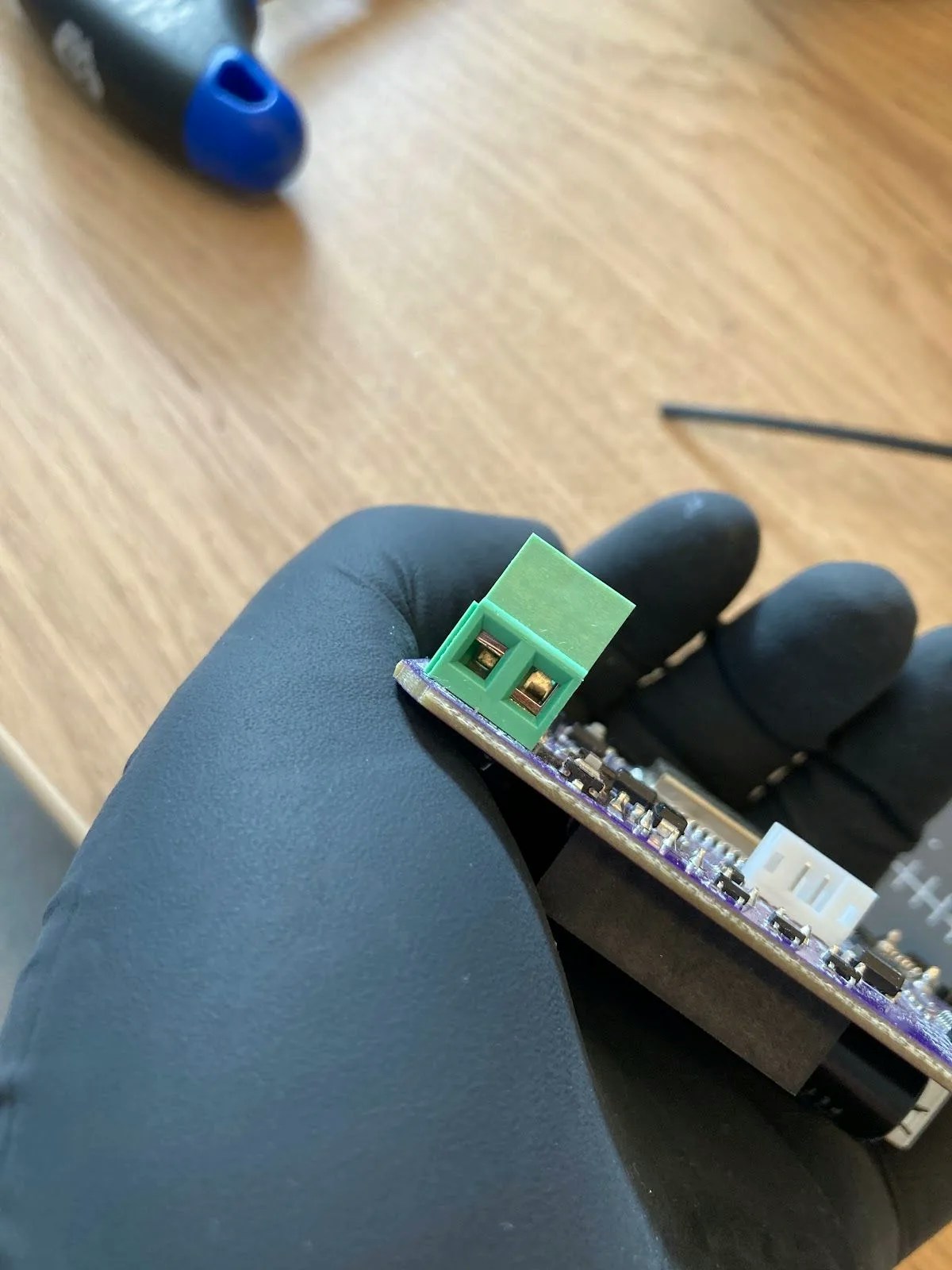
Open the PCB terminals
Locate the power terminals on your OSSM PCB. They arrive in the closed position.


Prepare the power cable ends
Strip and separate the other end of your power cable. Twist the exposed wire strands together to prevent splaying.


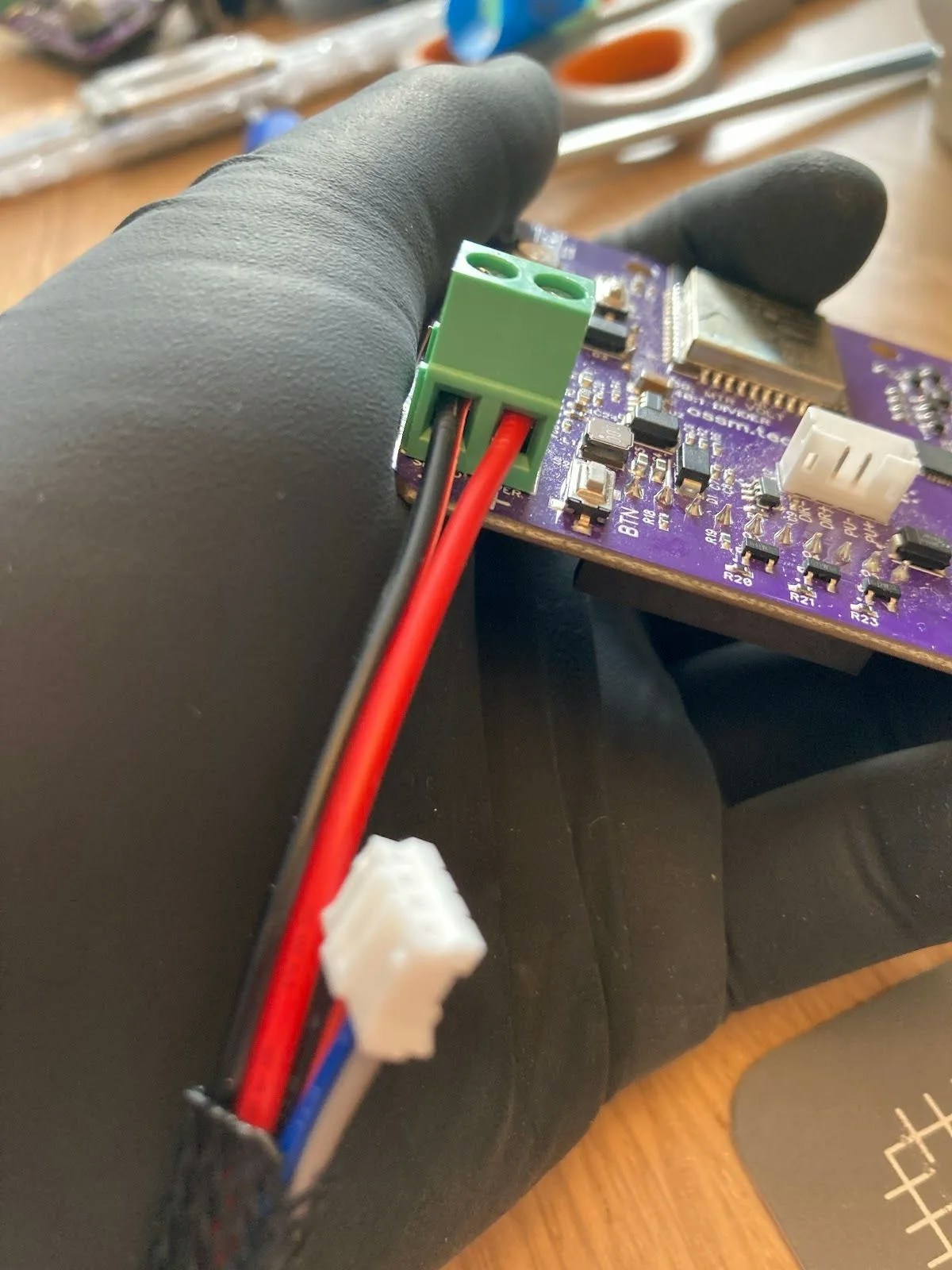
Connect power to the PCB
Insert the wires into the correct terminals:
- Black wire →
-terminal - Red wire →
+terminal
Complete the connections
- Plug the white connector from the PH04 cable into the matching white connector on the PCB
- Connect the green connector to the green terminal on the motor
- Plug your 24V power supply into the board
When powered on, the motor base displays a green light and the shaft begins rotating.
Troubleshooting
If you have your OSSM remote connected to the board during testing, the device cannot complete homing. This is expected behavior—homing requires your OSSM to be fully assembled with the rail installed.